3.5k words | Dan Hollick
Digital images.
A digital image is a sampled, quantised description of light—shaped as much by sensors and encoding as by the scene itself.
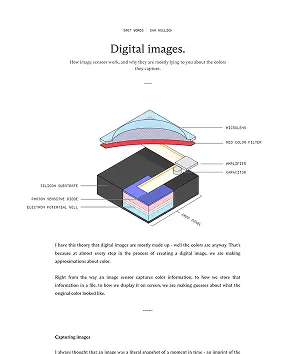
A digital image is a sampled, quantised description of light—shaped as much by sensors and encoding as by the scene itself. The apparent simplicity comes from a set of carefully chosen representations, transformations and physical assumptions working together.
Sampling
A sensor divides incoming light into a grid of measurements rather than recording a continuous field.
This is one part of a longer chain: scene becomes lens becomes sensor array becomes bitmap. The useful abstraction hides the physical work, but the underlying constraints still shape the software built above it.
Colour filters
Most sensors estimate full colour from a mosaic of filtered photosites.
The implementation is full of compromises. Precision, speed, storage and energy rarely improve together, so practical systems choose the errors people are least likely to notice.
Bit depth
More bits allow finer tonal steps, but increase storage and processing cost.
Once this layer is visible, familiar design conventions stop looking arbitrary. They are accumulated responses to the capabilities and limits of the machinery below.
A visual study based on the original chapter. Text is condensed and rewritten.